
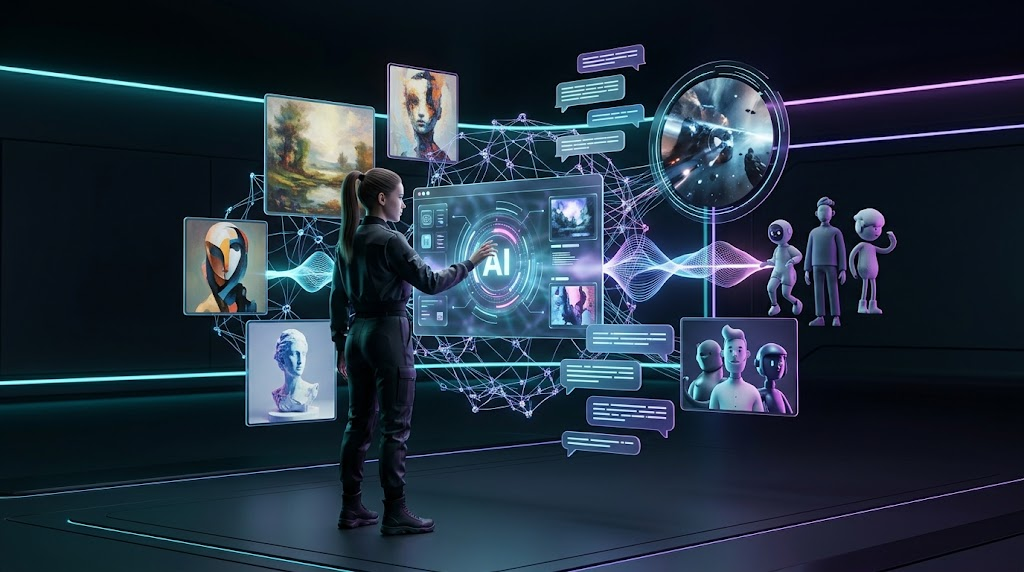
The Future of Creative AI: More Freedom, More Personalization, More Possibilities
Artificial intelligence is rapidly changing the way people create, communicate, and experiment with digital media. From generating original artwork to producing short videos, creating virtual characters, and having natural conversations with AI companions, modern creative tools are giving users more control over their ideas. One growing area of interest is uncensored AI, which focuses on providing a broader creative experience with fewer unnecessary limitations.
For creators, the appeal is simple: creative ideas do not always fit neatly into predefined templates. Users may want to explore unusual characters, imaginative environments, experimental artwork, fictional storytelling, or alternative visual styles without constantly encountering restrictive workflows. Platforms such as NoCensor AI are positioned around this demand, bringing multiple AI-powered creative experiences together in one accessible environment.
What Is Uncensored AI?
Uncensored AI generally refers to artificial intelligence platforms designed to provide a more flexible interaction and content-generation experience. Traditional AI tools often apply extensive filters or limitations to particular prompts, images, conversations, or creative concepts. While safeguards have an important role, excessive restrictions can sometimes interfere with legitimate creative experimentation.
An unfiltered AI platform takes a different approach by giving users greater freedom to explore creative concepts while still expecting responsible use. The objective is not simply to remove boundaries. It is to create an environment where users can experiment with different ideas, styles, characters, and formats more naturally.
This broader approach can be especially valuable for artists, storytellers, designers, hobbyists, and digital creators who want to explore AI beyond conventional productivity tasks.
Why Are Flexible AI Tools Becoming Popular?
The growth of generative AI has changed expectations around digital creativity. People increasingly want a single platform that can support different forms of content rather than requiring separate applications for every task.
A creator might begin with an idea for a character, turn that concept into an image, develop a short video around it, and then create a conversational personality for the same fictional character. A flexible AI ecosystem can make this workflow considerably easier.
Some of the biggest reasons users are exploring these platforms include:
- Greater creative freedom
- More experimentation with visual styles
- Faster image and video creation
- Personalized AI interactions
- Character-based experiences
- Convenient access to multiple AI tools
- Anonymous or privacy-conscious creative workflows
- More opportunities for unconventional digital art
This is where the broader uncensored AI category continues to attract attention.
AI Image Generation Is Becoming More Experimental
AI image generation has evolved beyond simple text-to-picture experiments. Today’s users can develop detailed characters, environments, illustrations, portraits, cinematic scenes, fantasy worlds, and conceptual artwork from relatively simple descriptions.
For someone searching for the best uncensored AI image generator, flexibility is often one of the most important considerations. A useful platform should make it easy to experiment with prompts and artistic directions without creating an unnecessarily complicated workflow.
An uncensored AI image generator can appeal to users who want to explore alternative artistic concepts, unusual character designs, surreal compositions, or niche creative themes. Instead of relying exclusively on predefined templates, creators can use natural-language prompts to influence the final result.
The phrase AI image generator no restrictions is increasingly associated with this desire for creative flexibility. However, responsible usage remains important. Users should always respect privacy, intellectual property, consent, and applicable laws when creating or sharing AI-generated media.
From Still Images to AI Video
AI video generation represents another major development in generative media. Instead of producing a single image, users can transform concepts into animated scenes, character sequences, visual stories, and short-form videos.
Interest in an uncensored AI video generator reflects the growing demand for more flexible video creation. Creators want tools that allow them to experiment with different visual narratives, camera perspectives, character movements, environments, and artistic styles.
The best uncensored AI video generator is not necessarily the one with the most complicated feature list. Ease of use, generation quality, creative control, consistency, and speed can all influence the overall experience.
AI video is particularly useful for:
- Concept development
- Short-form storytelling
- Character animation
- Social media experiments
- Visual prototypes
- Digital art projects
- Creative presentations
- Fictional cinematic scenes
As the technology develops, the distinction between traditional animation and AI-assisted creation will likely become increasingly fluid.
Exploring AI Art Without Conventional Boundaries
The rise of the uncensored AI art generator demonstrates how generative technology is expanding the definition of digital art. Artists no longer need to begin every project with complex software skills. Instead, they can describe an idea and use AI as a creative collaborator.
An NSFW AI art generator may also appear in searches surrounding platforms that offer broader creative flexibility. In practice, users should approach sensitive or adult-oriented creative tools responsibly, particularly when real people, private imagery, or identifiable individuals are involved.
The most useful platforms are those that make experimentation straightforward while encouraging users to remain aware of consent and privacy.
AI Face Swap and Character Experimentation
Face-swapping technology has become another fascinating part of the AI media landscape. An AI face swap can be used for creative transformations, fictional characters, entertainment concepts, and visual experiments.
An AI face swap photo tool can be particularly interesting for creators exploring character design. However, using another person’s likeness without permission can create serious privacy and ethical concerns. Responsible creators should use their own images or images for which they have appropriate authorization.
This distinction is important because powerful AI technology should increase creative possibilities without compromising someone’s identity or personal rights.
AI Companions Are Changing Digital Interaction
Generative AI is not limited to visual media. Conversational AI is becoming increasingly sophisticated, allowing people to interact with virtual personalities, fictional characters, and personalized assistants.
An AI companion chat can provide an interactive experience where users communicate with a character rather than simply entering commands into a conventional chatbot. Personality, tone, memory, and conversational context can make these interactions feel more dynamic.
Some platforms also explore uncensored AI chat, allowing broader conversational experimentation. For users, the appeal can come from having conversations that feel less rigid and more personalized.
Another emerging format is the AI voice call companion. Voice-based interaction can make an AI personality feel more natural because users can communicate through spoken conversation instead of typing every message.
Multiple Characters and Group Conversations
A particularly interesting development is the ability to create interactions involving multiple AI personalities. An AI group chat with multiple characters can simulate a conversation between several fictional participants.
For example, a writer could use multiple characters to explore dialogue before developing a story. A game designer could test interactions between different personalities. A hobbyist could simply experiment with how distinct AI characters respond to one another.
This type of experience highlights an important direction for AI: moving from one-to-one question-and-answer systems toward richer digital environments.
Anonymous AI Image Generation
Privacy is another factor influencing the development of AI creativity platforms. An AI image generator anonymous experience may appeal to users who want to experiment without unnecessarily connecting every creative activity to a public profile.
Privacy-conscious users should still review a platform’s policies before uploading personal photographs or sensitive information. In particular, creators should understand how uploaded content is stored, processed, and potentially used.
A trustworthy AI platform should make its approach to privacy and user data understandable rather than hiding important information behind complicated policies.
Responsible Use Still Matters
Creative freedom and responsible use are not mutually exclusive. Even when an AI platform offers broader generation capabilities, users remain responsible for how they use the technology.
Several principles are worth keeping in mind:
Respect consent. Do not create or distribute deceptive or intimate content involving real people without their permission.
Protect privacy. Avoid uploading sensitive photographs or personal information unless you understand how the platform handles that data.
Respect intellectual property. AI-generated content can raise questions about copyrighted characters, artwork, brands, and other protected material.
Label synthetic media when appropriate. Transparency can help audiences understand when an image, video, or character has been created with AI.
Use adult-oriented tools responsibly. Searches for terms such as AI NSFW, adult AI, or related creative technologies should always be approached with appropriate age restrictions and responsible practices.
The goal of flexible AI should be creative empowerment, not irresponsible use.
What Makes a Good Unfiltered AI Platform?
Not every platform offering fewer restrictions provides the same experience. Users should consider several factors before choosing a creative AI service.
1. Generation Quality
High-quality outputs remain essential. Whether generating images, videos, characters, or conversations, the results should match the user’s creative direction as closely as possible.
2. Ease of Use
A powerful tool becomes less useful when its interface is unnecessarily complicated. Straightforward controls and understandable prompts can make experimentation much easier.
3. Variety of Creative Tools
A platform offering image, video, chat, character, and voice-related features can provide greater value than a service focused on one narrow generation method.
4. Privacy
Users should understand what happens to prompts, uploaded images, generated content, and account information.
5. Creative Control
Prompt flexibility, customization options, character settings, and generation controls can make a major difference for experienced creators.
6. Responsible Policies
A platform can support creative freedom while still discouraging harmful or unlawful applications. Clear policies help users understand where responsible use begins and ends.
Why NoCensor AI Is Worth Exploring
For people interested in a broader AI creativity ecosystem, NoCensor AI offers a convenient destination to explore different AI-powered experiences.
Its relevance comes from the growing demand for flexible tools covering several categories rather than concentrating on only one generation format. Users interested in an uncensored AI image generator, uncensored AI video generator, conversational experiences, character interactions, and related creative technologies can explore these possibilities within a broader AI-focused environment.
The appeal is particularly strong for creators who enjoy experimentation. Instead of treating AI as a rigid productivity tool, platforms in this category present it as a creative playground where users can test concepts, develop characters, explore visual ideas, and discover new forms of digital expression.
The Future of Flexible AI Creativity
The next stage of generative AI will likely be defined by personalization. Users will expect AI systems to understand their creative preferences, remember project context, and support multiple forms of media within a single workflow.
Imagine starting with a written character description, generating an uncensored AI image, turning the character into an uncensored AI video, and then interacting with that personality through an AI companion chat. As multimodal AI becomes more capable, workflows like these could become increasingly accessible.
The same technology could also help independent creators produce prototypes, writers visualize characters, designers experiment with concepts, and hobbyists explore entirely new forms of digital storytelling.
Rather than replacing human creativity, AI can function as an accelerator. The person still provides the idea, direction, judgment, and creative purpose. AI simply makes experimentation faster and more accessible.
Frequently Asked Questions
What is uncensored AI?
Uncensored AI generally refers to AI platforms designed to provide a more flexible creative or conversational experience with fewer unnecessary content restrictions. Users should still follow applicable laws, platform policies, privacy principles, and consent requirements.
What is an uncensored AI image generator?
An uncensored AI image generator is an image-generation tool intended to provide broader creative flexibility. It can be useful for experimenting with characters, artistic styles, environments, and unconventional concepts.
What is the best uncensored AI video generator?
The best option depends on individual requirements. Users should compare generation quality, customization, speed, interface, available features, privacy, and responsible-use policies before choosing a platform.
Can AI create characters and conversations?
Yes. Modern conversational AI can generate fictional personalities and interactive character experiences. Some platforms also support multiple characters participating in the same conversation.
What is an AI face swap?
AI face swapping uses artificial intelligence to replace or transform facial features within an image or video. It can have legitimate creative applications, but users should obtain appropriate permission when using another person’s likeness.
What is an AI companion?
An AI companion is a conversational virtual personality designed for ongoing interaction. Depending on the platform, interaction may happen through text, voice, or other media.
Is AI-generated adult content responsible to use?
Adult-oriented AI technology should be used only by adults and with careful attention to consent, privacy, legality, and the rights of real people. Creating intimate or deceptive material involving someone without their permission is not responsible use.
Conclusion
Generative AI is moving beyond simple prompts and basic automation. It is becoming a versatile creative environment where images, videos, conversations, characters, voices, and interactive experiences can exist together.
The growing interest in uncensored AI, unfiltered AI, AI image generation, AI video creation, AI companions, face swapping, and interactive character experiences reflects a broader desire for creative freedom and personalization.